17 Giu 2026
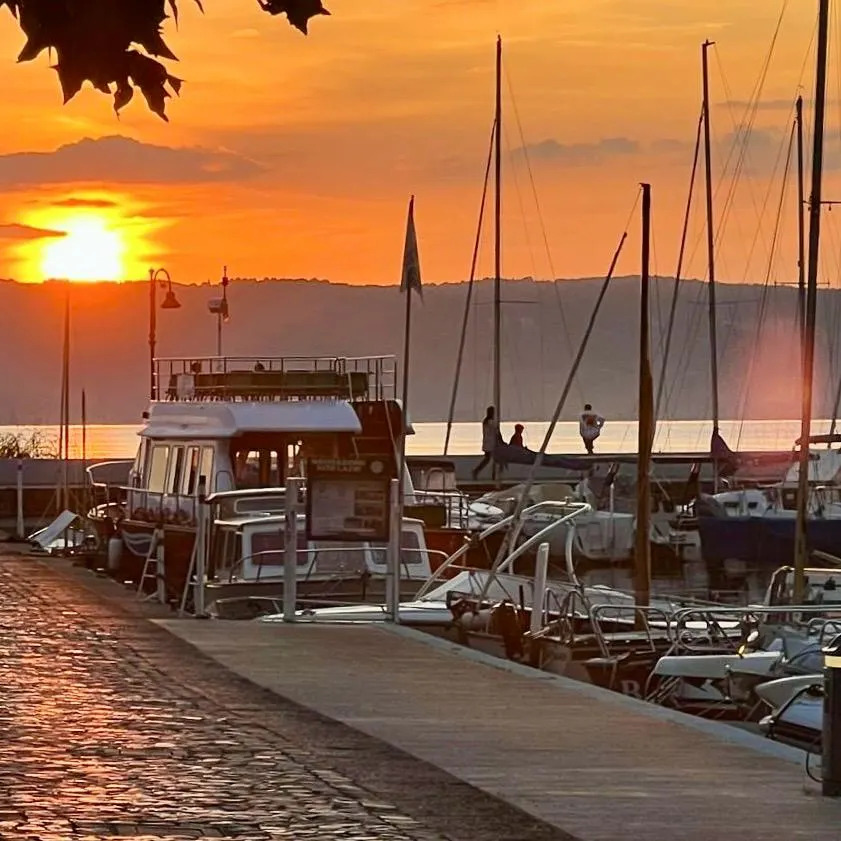
Volcanic Beauty in Bolsena
A timeless holiday resort town blends with Etruscan archeology in the town by the volcanic lake
Read moreWho hasn’t fantasized about the medieval life, wandering through stone villages, simple living, rustic and wholesome food. Ideally, we remain immune to ailments like consumption and plague. Outside Rome, beyond the Elysian fields, and through the La Valle dei Calanchi, Civita di Bagnoregio withstands the pressings of time atop a crumbling rock.
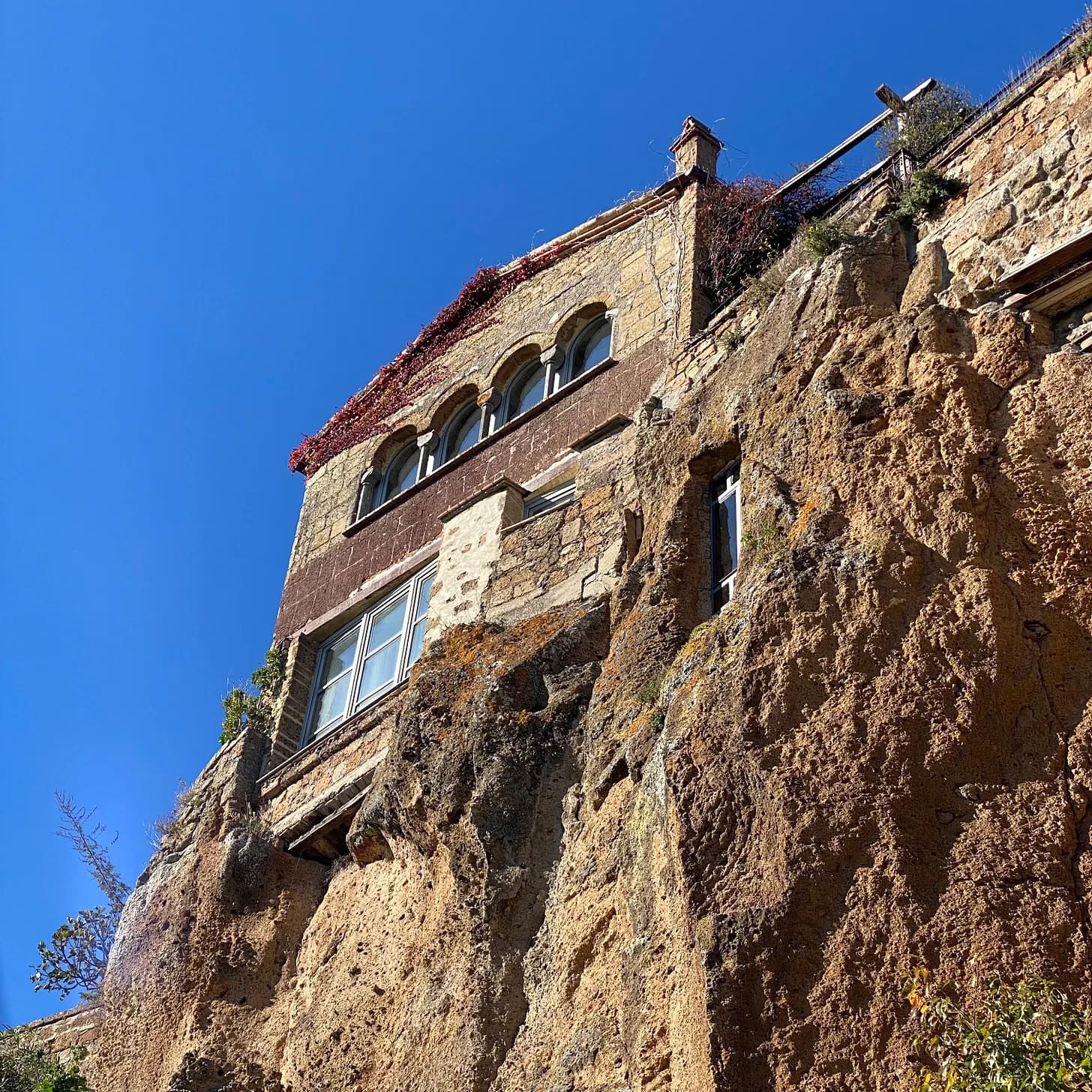
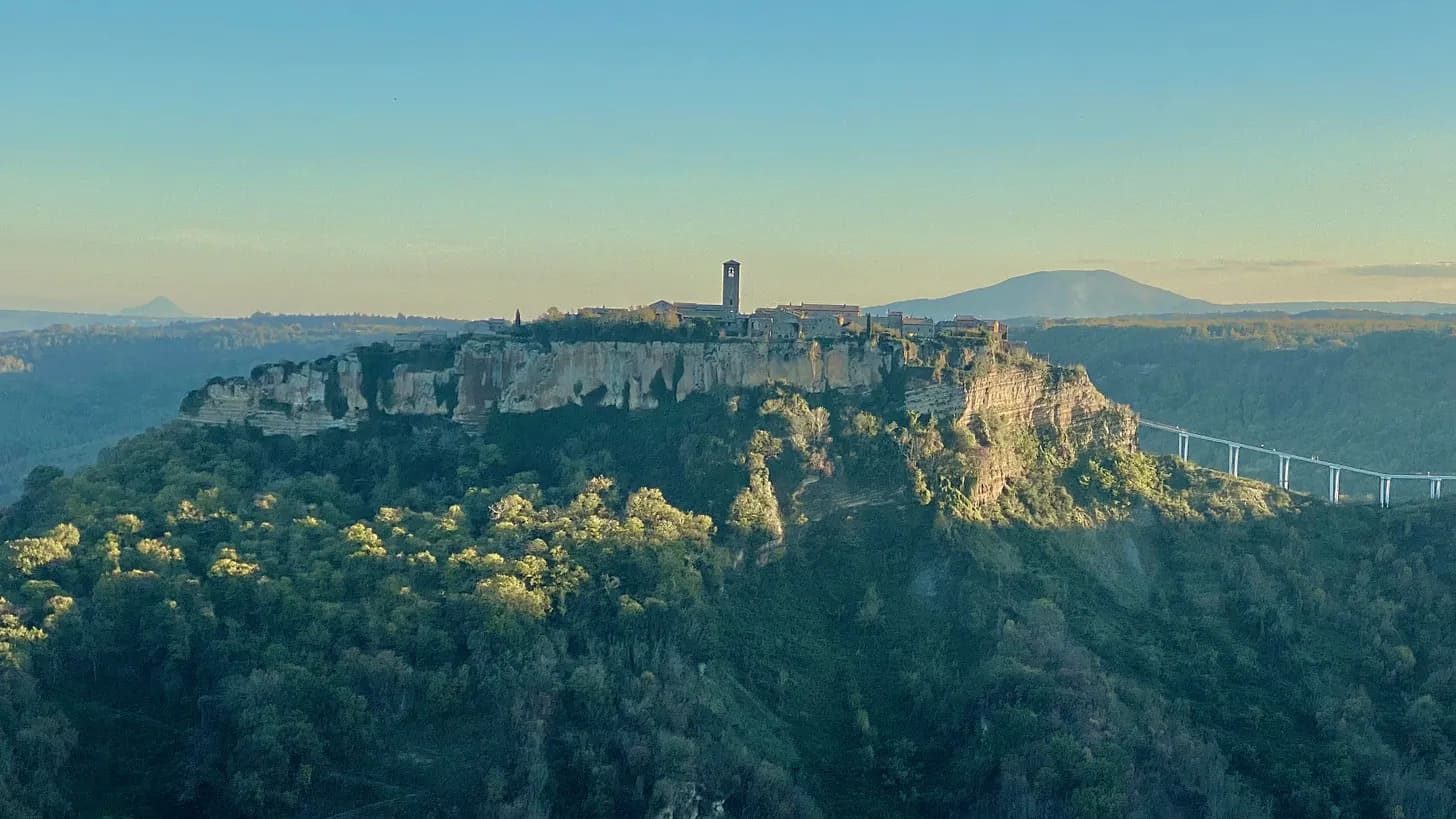
Accessible only by pedestrian bridge, the village stands alone atop steep ravines that dip into weaving canyons below. The city’s prolonged but imminent erosion gives it a rather dramatic image. Stacked atop steep cliffsides on all angles, Civita dramatically stands up against the expansive valleys beckoning below.
Formed 2,500 years ago by the Etruscans, ancient inhabitants who give Tuscia its name, Civita is known today as “The Dying City.”
Its foundation is made up of tuff soil, a type of volcanic earth, and clay, which slowly wears beneath the weight of the village.
In time, Civita di Bagnoreggio will return to the dust by which it was raised. Until then, this borgo is one of Italy’s many relics that call to an era long past.
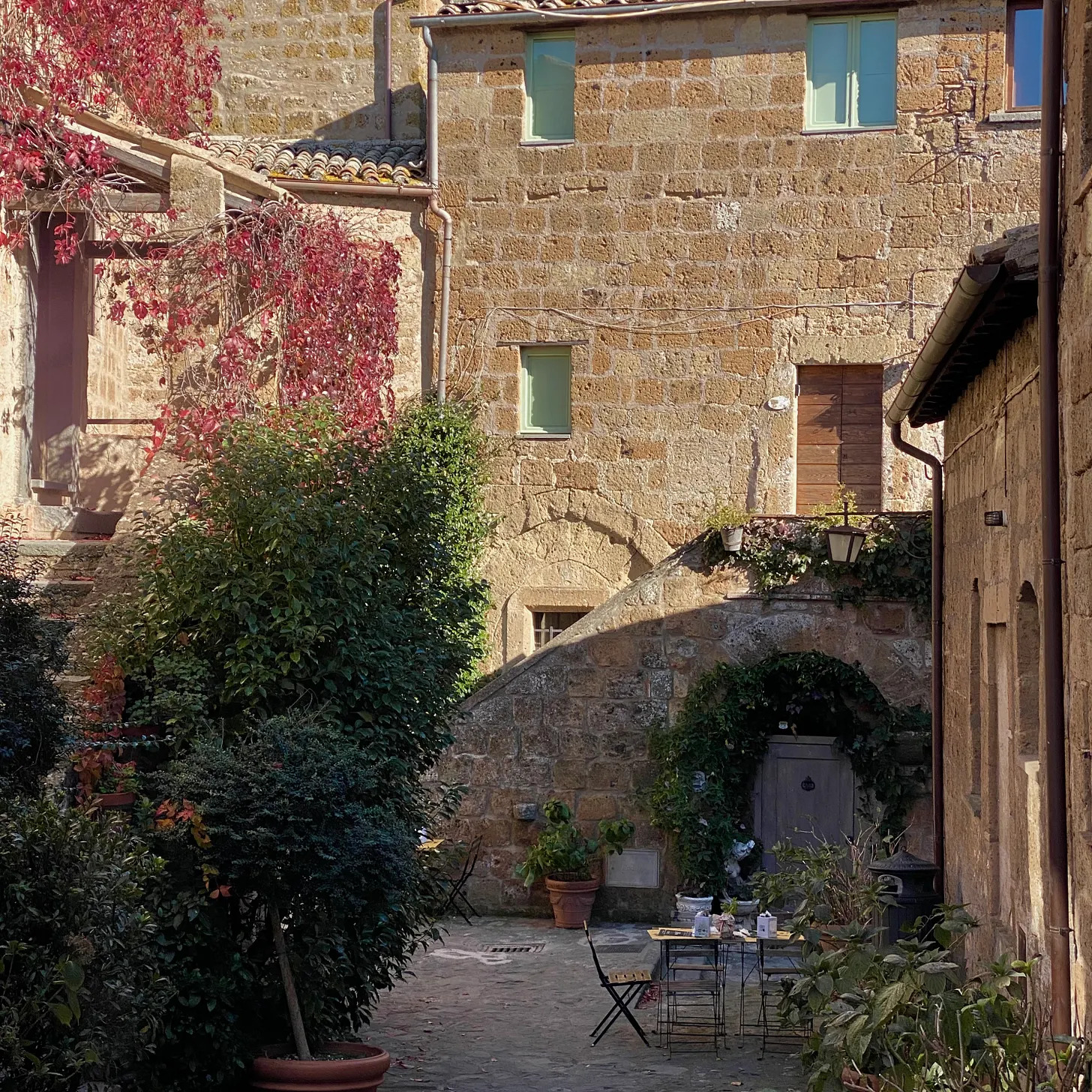
Civita can only be entered via pedestrian bridge. Open every day from 8:00 AM – 8:00 PM, visitors must pay a €5 fee before ascending the walkway. Once you pass under the Santa Maria gate, the village opens up. While the Etruscan foundations remain, all visible architecture hails from medieval and Renaissance eras.
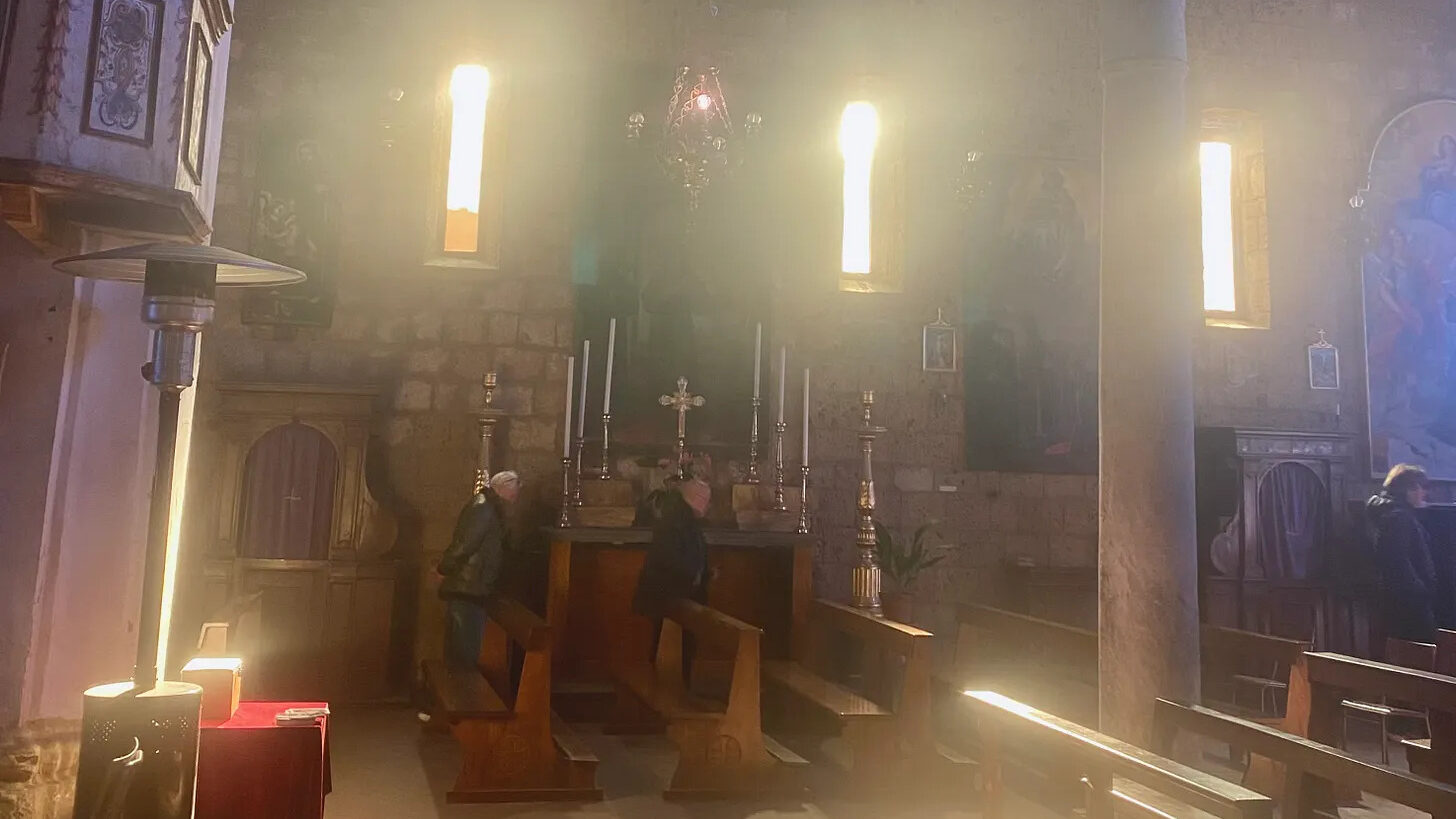
A main point of reference in Civita is the Church of San Donato. The small Romanesque chapel invites quiet awe as light filters through delicate glass windows, illuminating religious relics and fresco remains.
While on the religious walk, follow the main road out of the square to venture beneath the cliff faces. Here you’ll find La Cappella della Madonna del Carcere. Hidden within what was originally an Etruscan-dug tomb, the underground worship site offers a look both at the village’s religious history and how drastically its buildings have integrated into the very cliffsides.
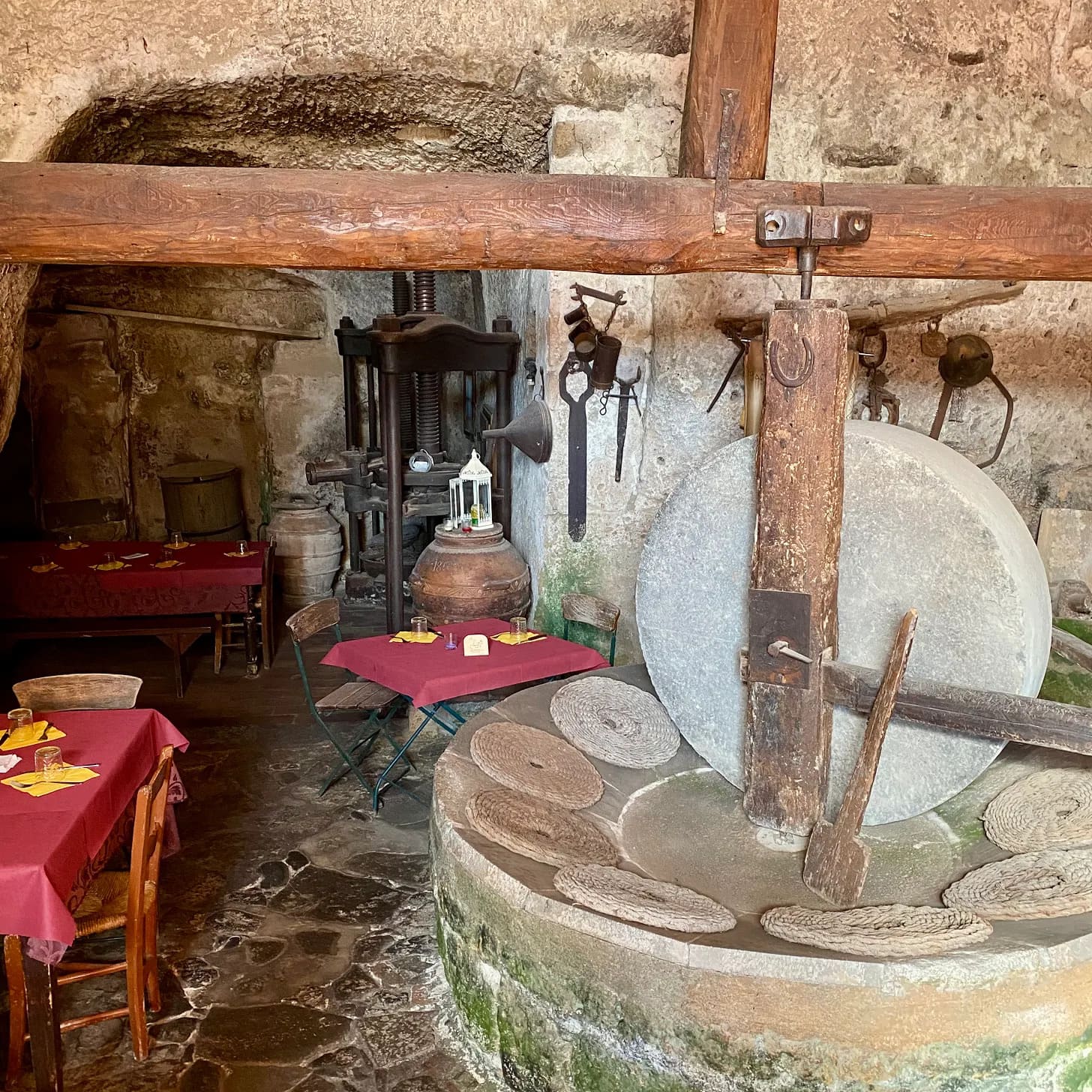
Whilst strolling through the streets, you’ll likely find your way to the Antico Frantoio, a 16th-century olive oil mill-turned restaurant that sells the agricola’s own olive oil and wine.
I imagine that centuries of candlelit dinners have been spent within the enchanting grotto. Even if you don’t stay for a drink, the owner, whose family has owned the mill for generations, is happy to offer a peek inside.
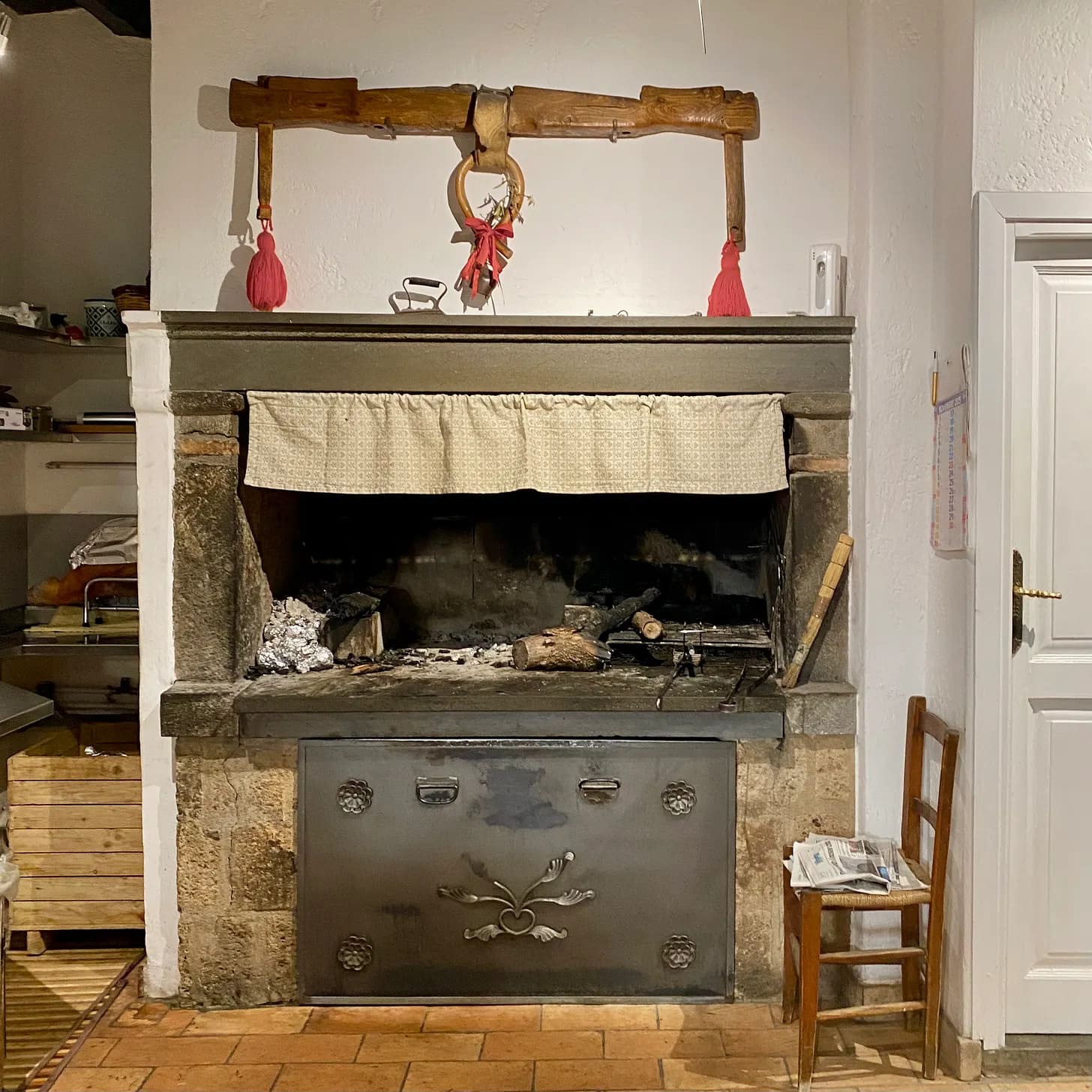
As the warm smell of burning firewood drifts through alleyways, a meal made over open flame feels mood-appropriate. La Cantina di Ariana delivers with fire-grilled meats and vegetables in a rustic restaurant that matches the cozy, medieval atmosphere. Along with char-grilled meats, they cook up delicious regional dishes that change by the month to match seasonal availability. Local favorites include pappardelle al ragù bianco, cicorie fritte, and handmade ravioli.
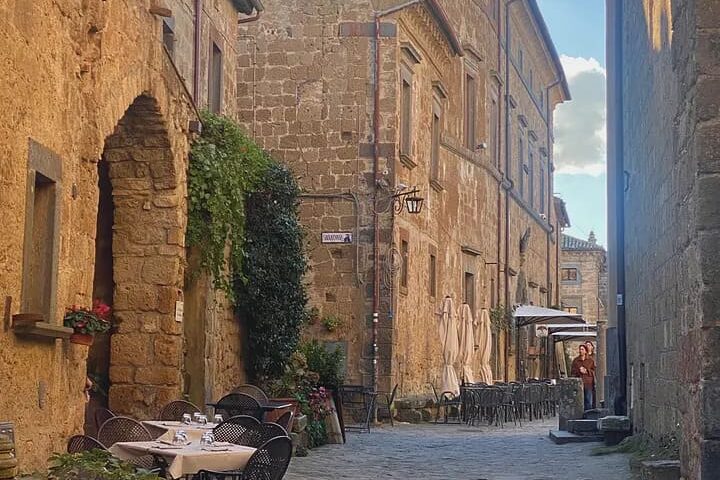
During warmer months, they offer patio seating where you can watch the stray cats wander about, exchanging pets for food.
Should you be craving a simple and affordable place to post up, La Bottega del Nonno Leone makes fresh panini with locally supplied meat. They have a full drink selection from soda to craft beer and local wine.
Venture an hour outside the eternal city, and you’ll find one waiting to end. Until Civita officially returns to ruins, it remains as a relic of people from millennias past. From the innovative Etruscans, who dug the drainage systems to keep the city standing, to modern Italian construction and preservation initiatives that keep the city alive today. As long as it remains, Civita exists as a symbol of wonder, a revisitation to the idea that fantastical places still exist in this world.
Open Daily 8:00 AM – 8:00 PM
Entrance Fee: €5
People still live here. Please respect that many of the beautiful places you’ll encounter and photograph are family homes passed down through generations. Treat them kindly.

Immerse yourself in the greeneries of Tuscia
and learn from the experts in fields.
A timeless holiday resort town blends with Etruscan archeology in the town by the volcanic lake
Read more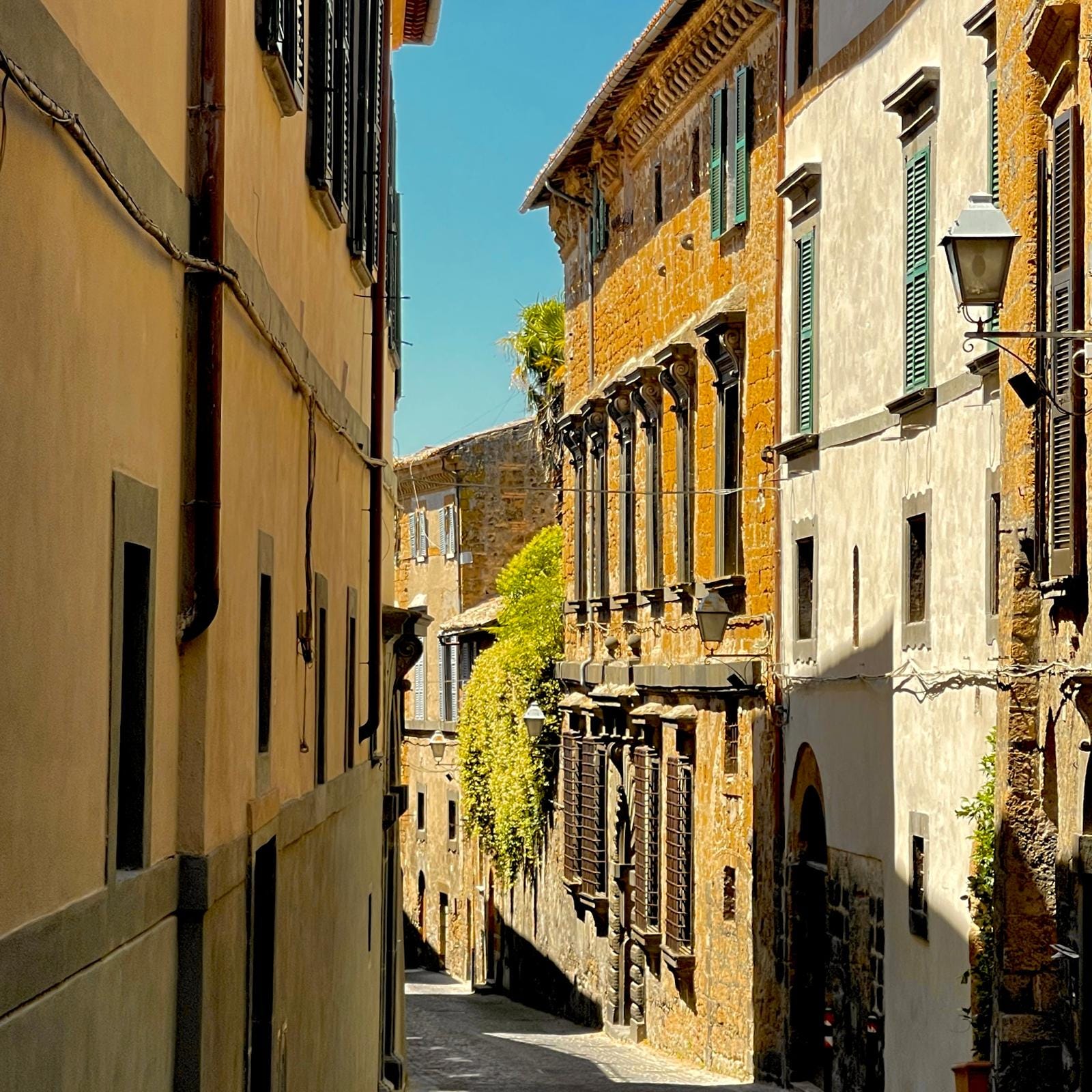
Step between blossoming stone corridors and discover an ancient city built above the Umbrian hills.
Read more
Put down the bread and follow me to the vegetable stand!
Read more