17 Giu 2026
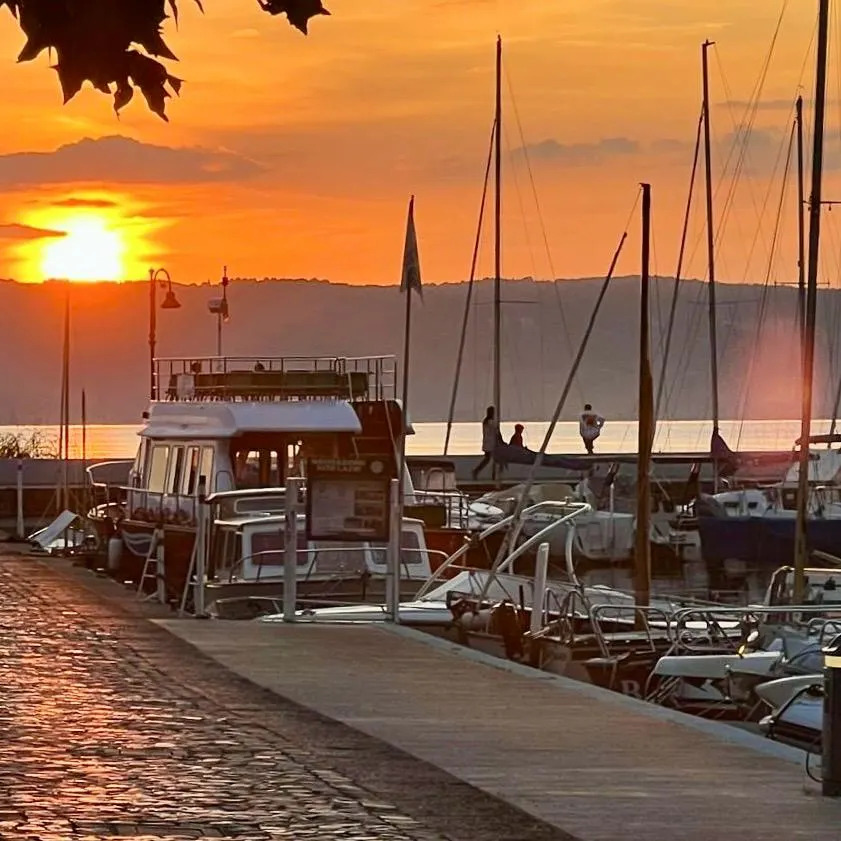
Volcanic Beauty in Bolsena
A timeless holiday resort town blends with Etruscan archeology in the town by the volcanic lake
Read more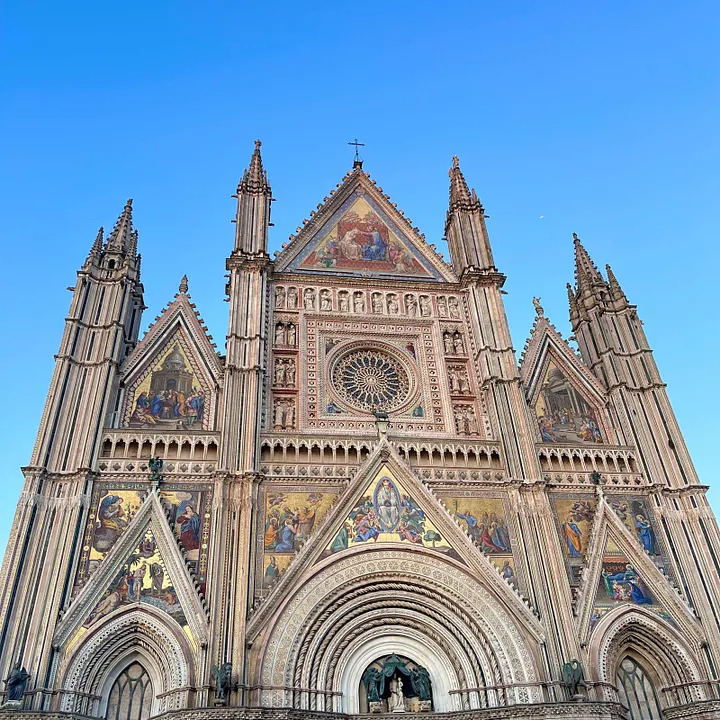
Perhaps by now it’s no secret that Umbria is one of Italy’s sacred gems. Literally within the heart of Italy, right in the center, Umbria is a land of rolling hills, quaint towns, and slow-moving people. Often overshadowed by its powerful neighbors like Florence and Rome, only in the past few decades has Umbria become a region sought after on its own terms.
One of Umbria’s most astounding cities is Orvieto. A city on a hill, the spectacular town is believed to be the ancient Etruscan site of Velzna, Latinized to Volsinii in Roman times. Once a major center of wealth and culture in Etruria, Volsinii’s official location is disputed. However, many believe it to be the modern-day Orvieto, crediting archeological evidence and geographical placement.
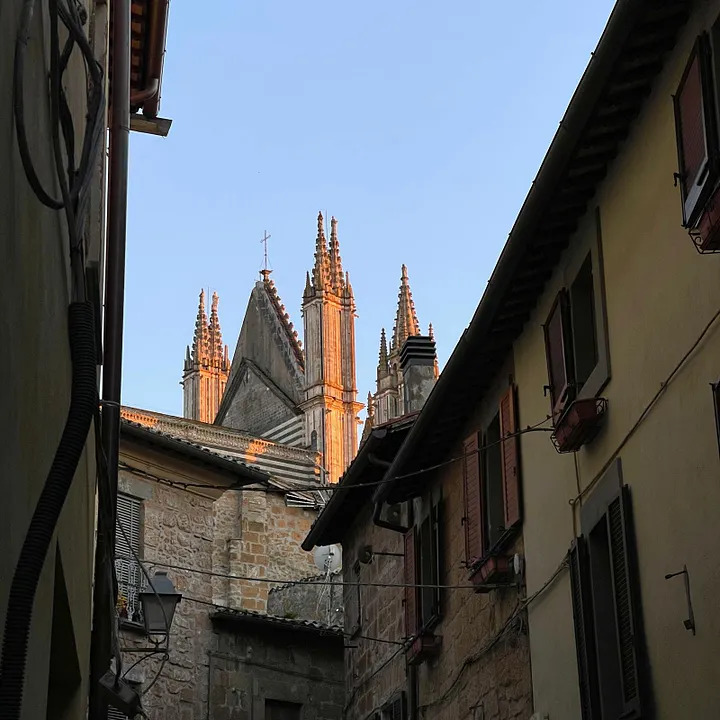
The city center rises above the ground on a tuff hill, a type of volcanic ash weathered into soil over a span of centuries. The most notable structure is the Orvieto Cathedral that towers above the quintessential medieval town like a catholic castle. It easily rivals the Florence Duomo in beauty and grandeur.
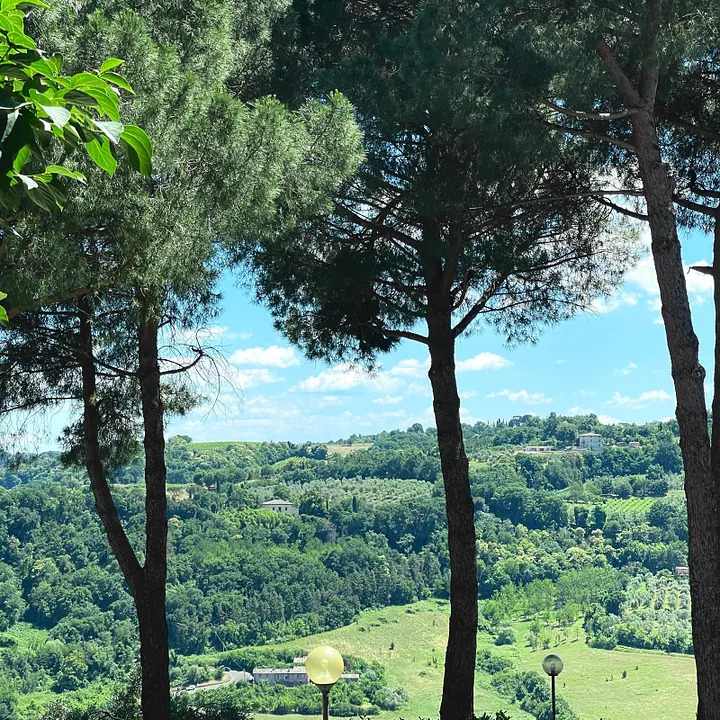
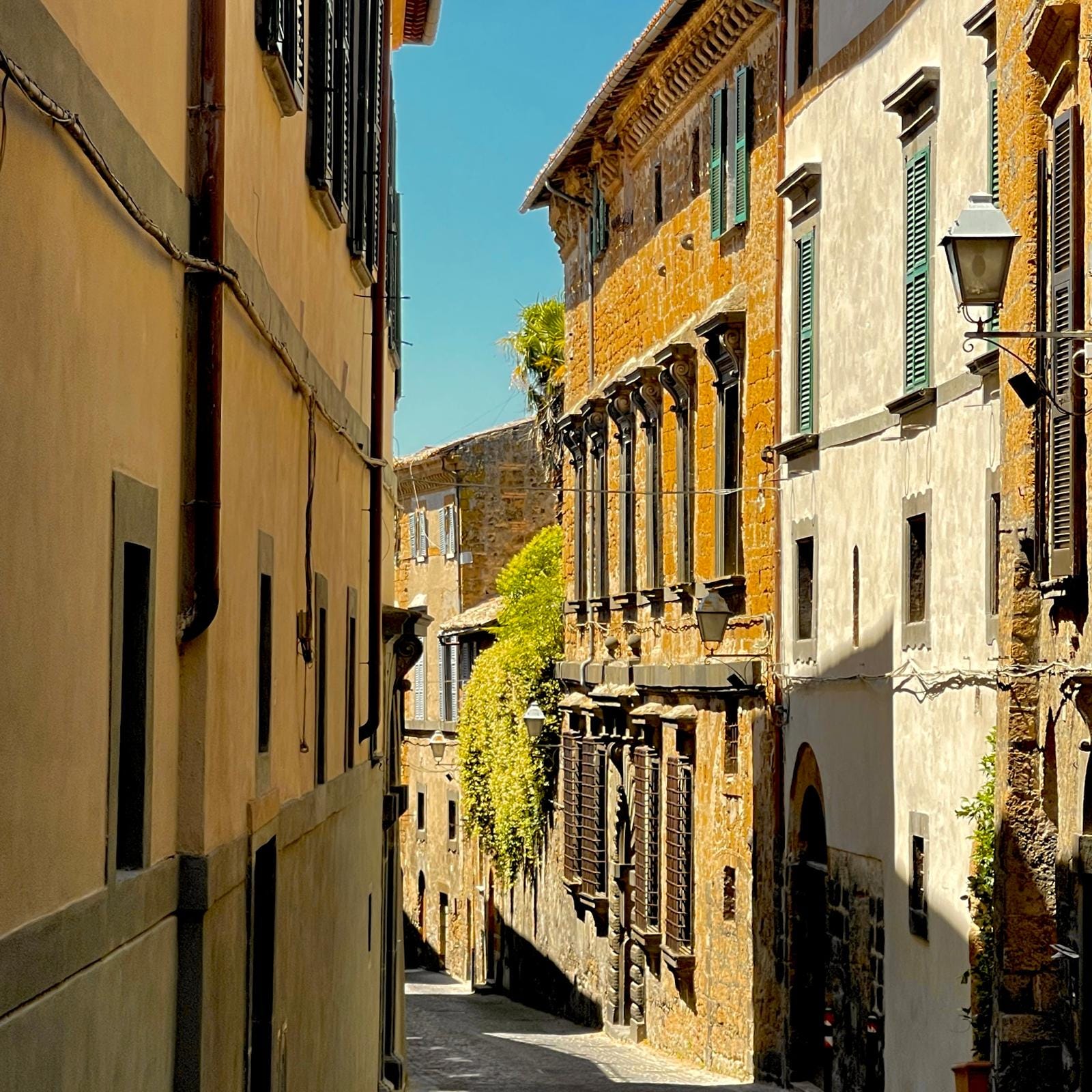
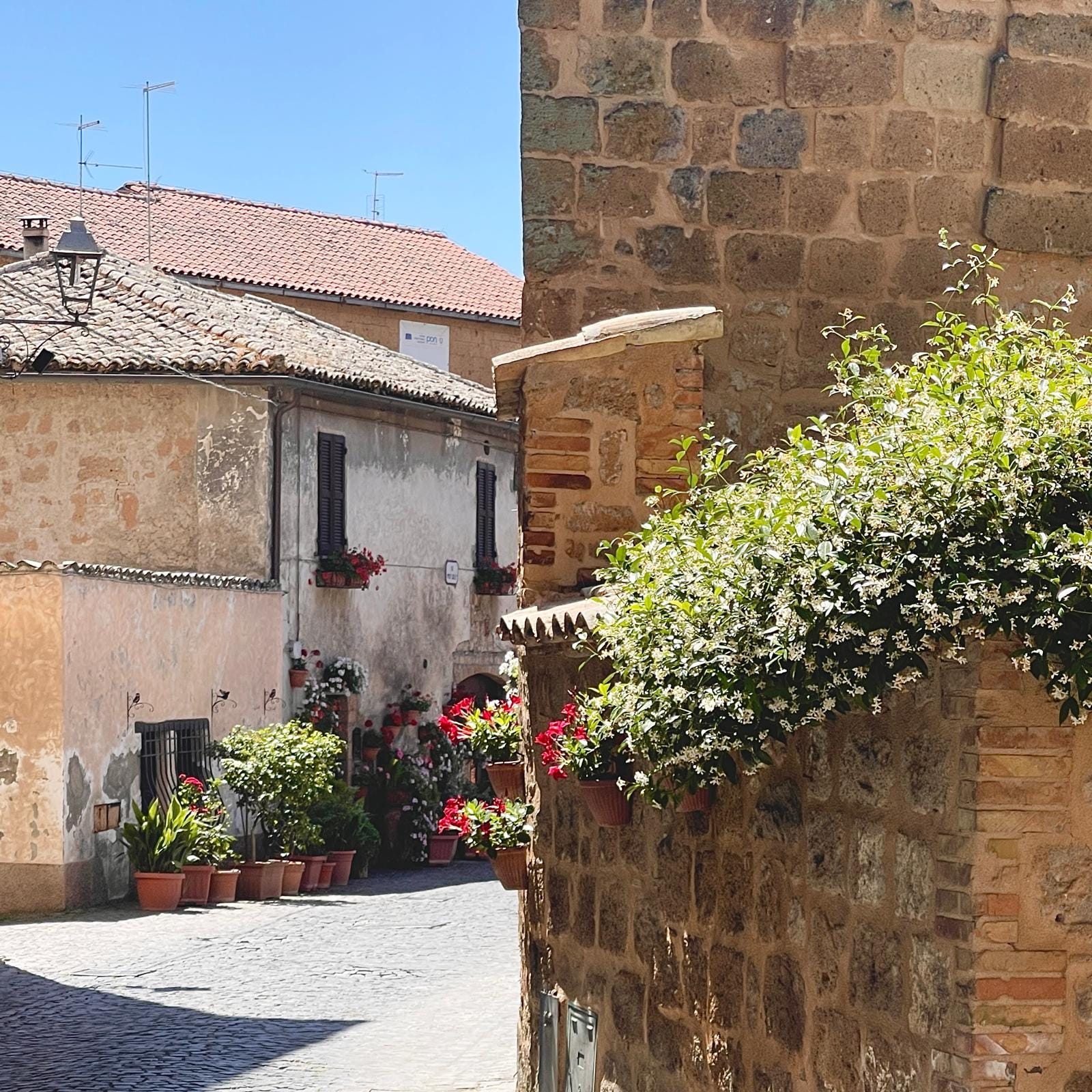
Soft beauty contrasts this architectural giant in hidden streets overflowing with flowering trees and stone walls that hide grand villas. While strolling, you might be caught off guard by a sudden panorama of the Umbrian countryside, which encompasses the rock from every side.
Walking Orvieto, I often find myself imagining that I’ve been planted into a romantic fairytale from a different era.
The Duomo di Orvieto was completed between the 13th and 14th centuries by several prominent architects. It stands today as one of the greatest masterpieces of Italian Romanesque-Gothic architecture.
Many prominent sculptors and artists contributed to the Duomo’s construction. Most notable is Lorenzo Maitani, credited as the cathedral’s primary architect. It’s easy to spot similarities between the Orvieto Cathedral and those of Florence and Sienna. Many of the architects, sculptors, and Masters of the Works had previously worked on the duomos for Florence and Sienna. Their influence, therefore, completes a theme across north-central Italian architecture, making a blueprint for Renaisance design.
At sunset, the intricately laid gold and stained glass reliefs glitter against the waning rays. Even from miles away, you can glimpse the bright cathedral shining in the last lights of day.
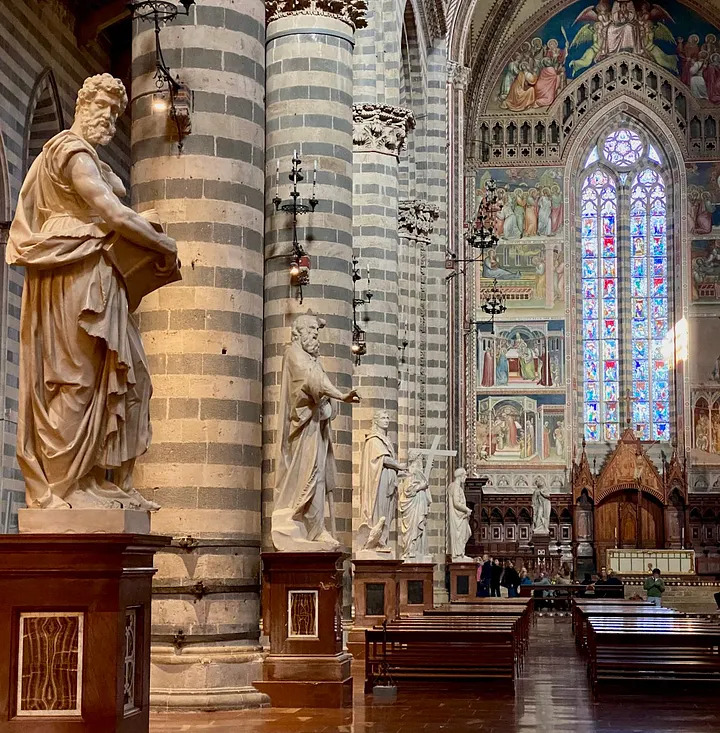
Inside the cathedral is a staggering cornucopia of religious structures.
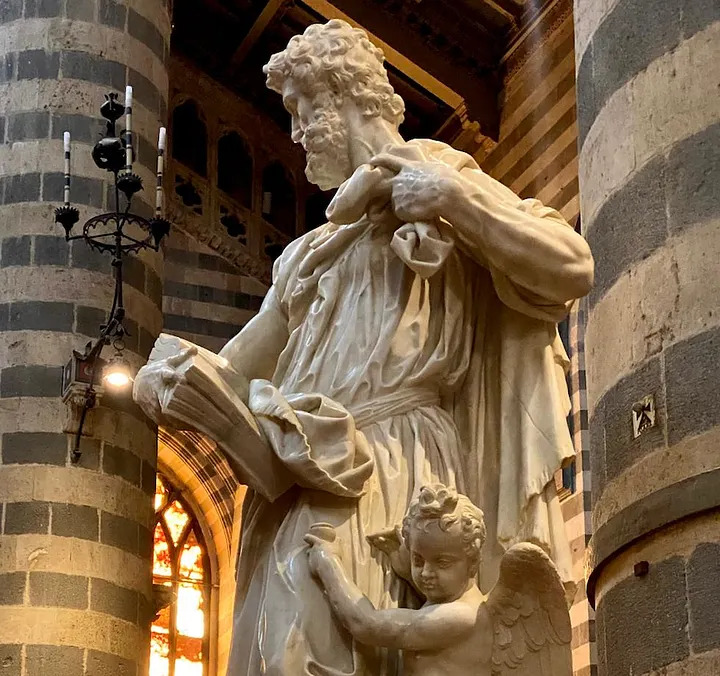
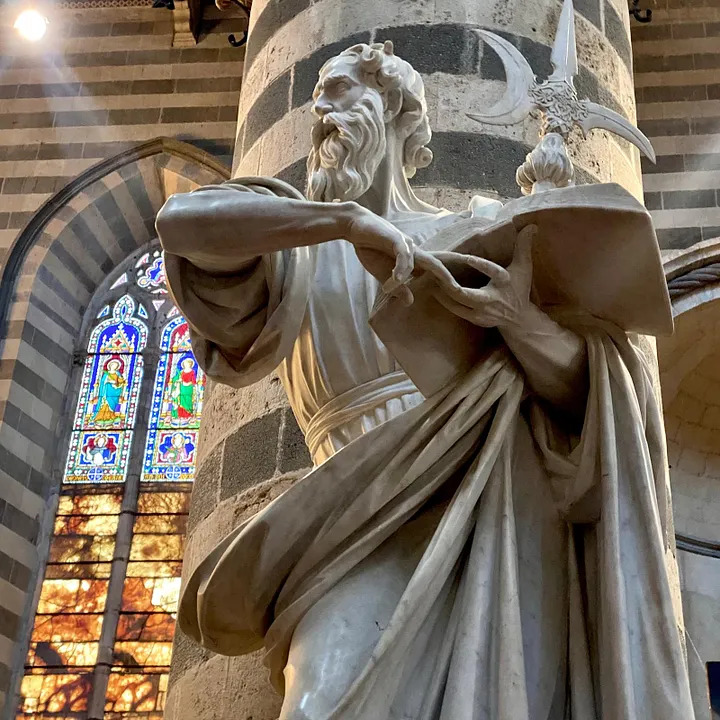
Marble statues of the Twelve Apostles line the way to the altar. Each man holds iconography related to his teachings and martyrdom. If you really want to challenge your Roman Catholic trivia knowledge, see how many of the apostles you can guess, using their assigned symbols as clues. I once spent an entire afternoon researching each one and can attest that it makes future museum visits more engaging.
The gothic frescoes that surround the altar were once the largest series of frescoes in all of Italy. They depict the life of the Virgin Mary, one of the primary figures dedicated by the cathedral.
The reason for commissioning such an imposing religious structure is due to the religious relic housed within it. In 1263, a priest pondered the validity of transubstantiation, otherwise known as the transformation that occurs during communion. The bread becomes the Body of Christ, and the wine, the Blood of Christ. As the priest doubted the ritual’s literal meaning, the sacramental bread began to bleed with the Blood of Christ, staining the cloth it sat on.
This cloth, known as a corporal, was taken to the Pope at Orvieto, where the incident was heralded as the Miracle of Bolsena. The sacred corporal is preserved within the Chapel of the Corporal on the north side of the church.
To the left, you’ll enter the Chapel of the Madonna di San Brizio, a bright room featuring a multitude of religious reliefs by Luca Signorelli, which depict scenes from Revelation. These include The Preaching of the Antichrist, End of the World, and the Resurrection of the Flesh.
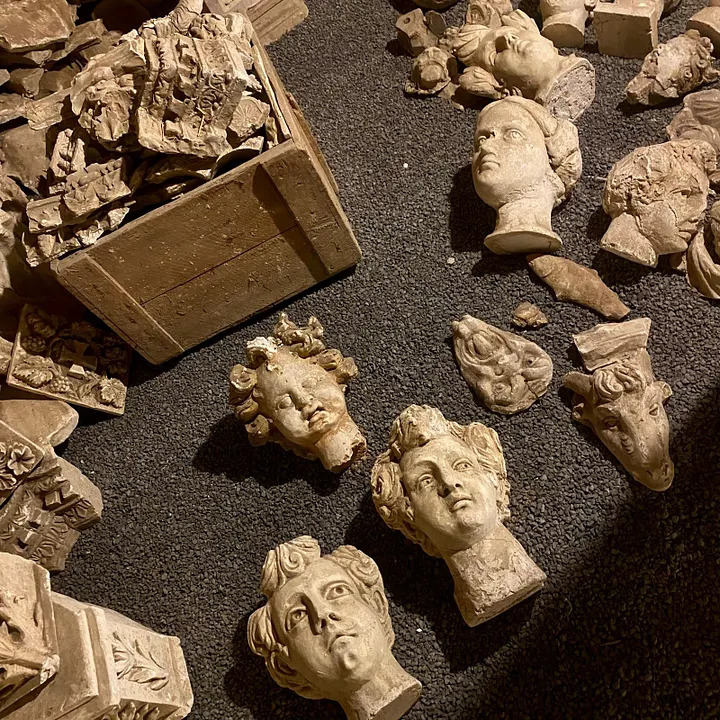
A ticket to the Duomo includes access to the Orvieto Underground. Being set upon a volcanic cliff presents some challenges to expanding for storage and waste. The solution often found is to carve caves out of the malleable soil. Thus, there exists a vast cave network beneath the city’s surface dating back from Etruscan times, to medieval, to the recent past. Even today, the people of Orvieto use caves beneath the city as storage.
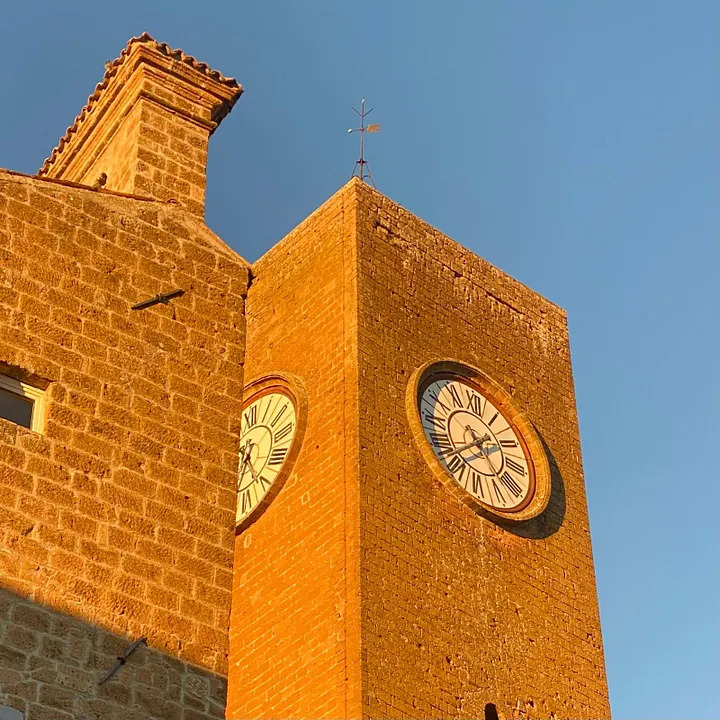
Between 8 am and 1 pm, every Thursday and Saturday, you’ll find the city bustling with buyers and sellers at Orvieto’s farmers’ market. Artisans and farmers unite to sell their wares beneath the Palazzo Del Capitano Del Popolo.
It’s a great place to purchase seasonal produce and handmade jewelry to remember Tusica by.
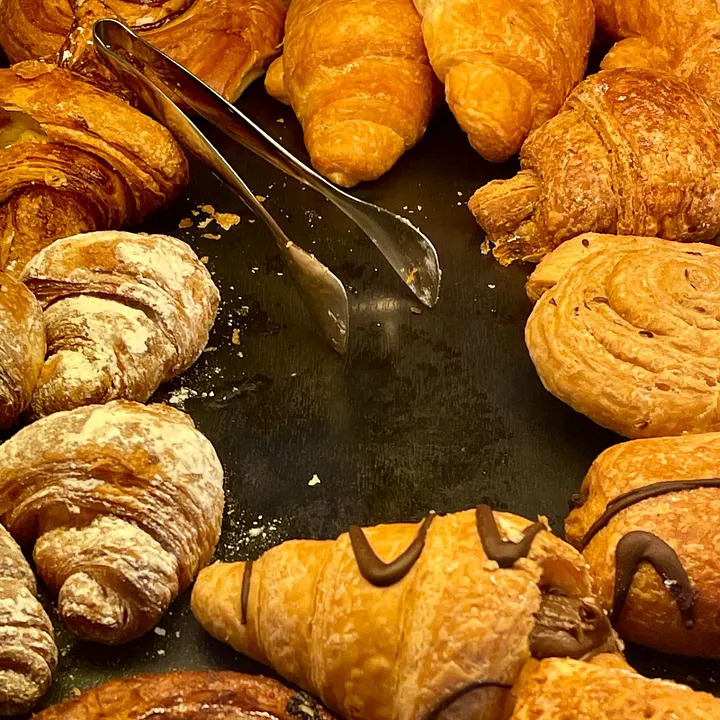
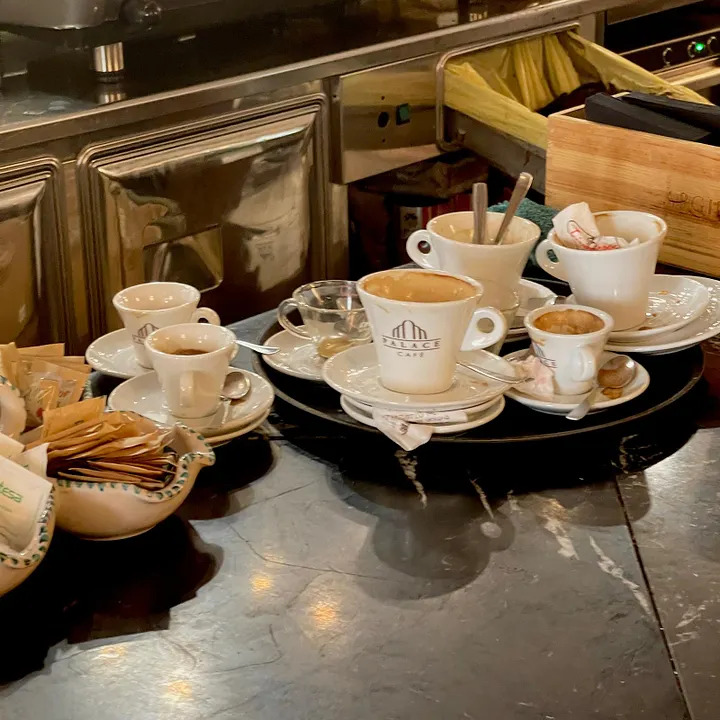
Known as one of the best cafes in Umbria, Montanucci serves up a fresh breakfast of housemade pastries. My personal favorite is the pasticiotto topped with in-house amarena cherries.
At lunchtime, take your pick of ready-made plates typical of an Italian bar. It’s common to find insalata di couscous, panzanella, and verdure al forno.
A quaint theater cafe, part of the Teatro Manicelli. The spot is charming enough to stand out against the more standard bars while remaining within a comparable price range for classic coffee and cocktails.
The gentle breeze that flows through the loggia adds to the allure during hot summer months, while the slight elevation above the street makes for optimal people watching.
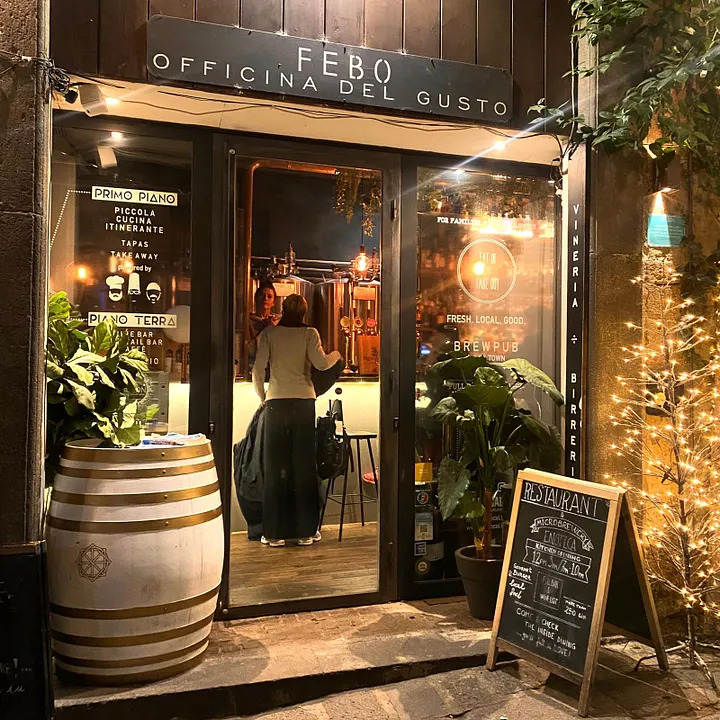
One of the few dining restaurants that serves real food between Italian lunch and dinner hours. Typically, restaurants close between 2:30 pm and 7:30 pm.
Designed as the Italian answer to a gastropub, FE3.0 serves craft beer, big burgers, and upscale American bar favorites.
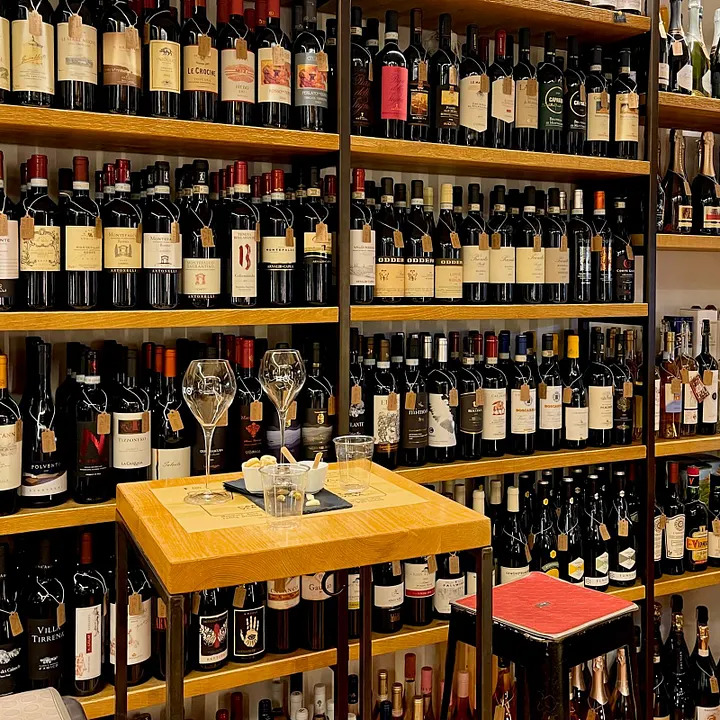
You’ll pass several shops while walking along the main road to the Duomo. One of the most notable is the Bottega Vera, a two-room enoteca-deli combo perfect for a light aperitivo.
Bottega Vera is the best place to pop into for local wines from Orvieto. Other notable tastings include popular wines from countryside neighbors that include Montefalco, Maremma, and Chianti.
Cantina Barberani is established as one of the best examples of high-quality Orvieto wine. While their actual cantina requires a car to reach, the enoteca sits just in front of the cathedral.
Barberani makes their organic-certified wine using biodynamic practices. This translates to “natural wine” made with considerable attention to environmental regeneration. Spontaneous fermentation gives the wine a vibrancy that you don’t typically taste in wines from the area.
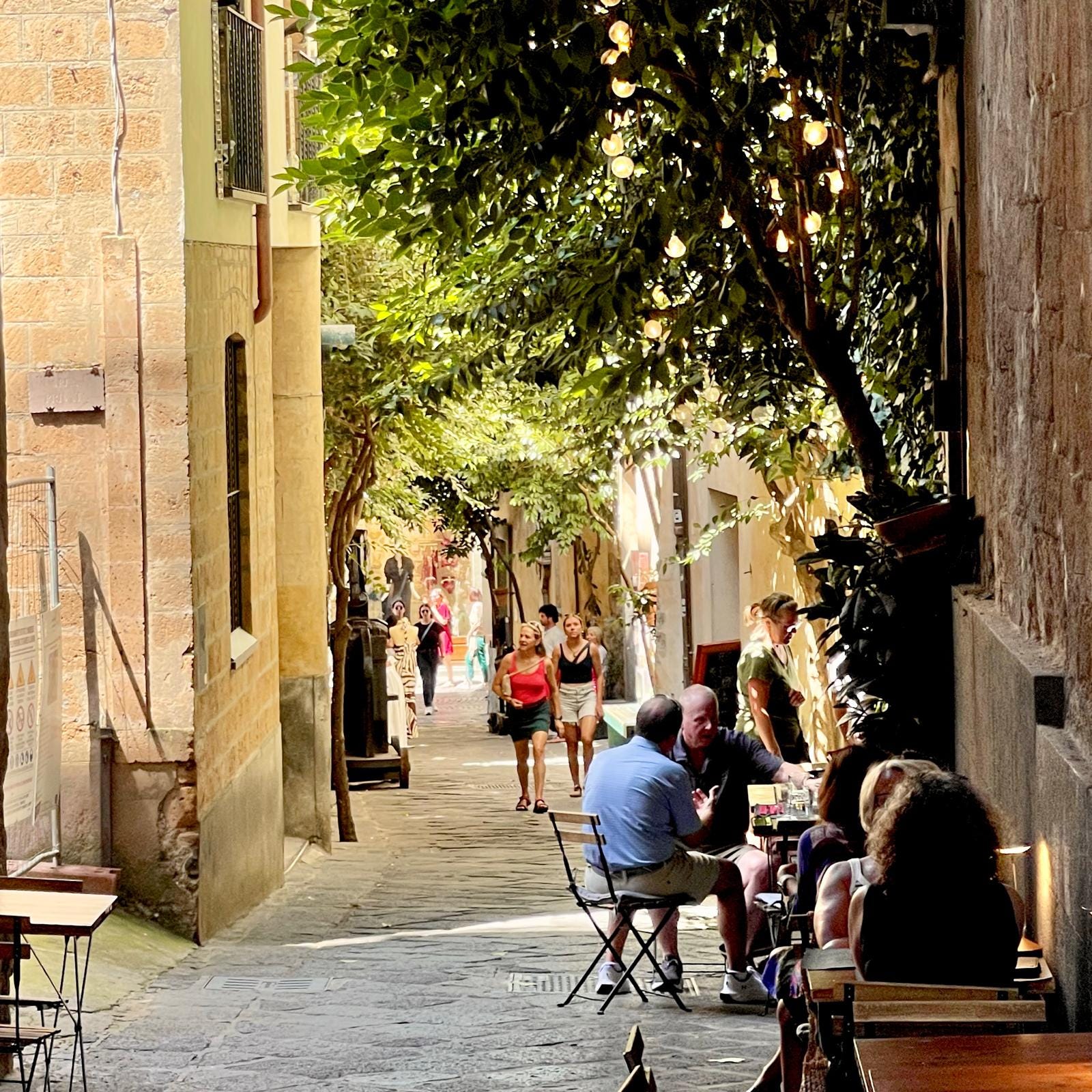
A small, family-owned restaurant that serves classic dishes from the region. Ask for their seasonal offerings featuring regional produce and local specialties like umbricelli al tartufo or scafata di fave. The chef makes the best bacala all’orvieto (cod fish cooked with tomatoes, pine nuts, and golden raisins) I’ve yet to try.
Order a regional white like Grechetto to satiate every dish.
As one of the more recently opened restaurants, Arso welcomes a modern dining climate that preserves the traditional farm-to-table philosophy. In a town known for its love of the past, Arso’s chef and founder, Tommaso Tonioni, turns the rural table into a gastronomic design.
Ethically sourced prime cuts and seasonal produce fill the menu, ensuring that sustainable cuisine remains the focus of this culinary project.
Ready to explore Orvieto on your own?

Immerse yourself in the greeneries of Tuscia
and learn from the experts in fields.
A timeless holiday resort town blends with Etruscan archeology in the town by the volcanic lake
Read more
Put down the bread and follow me to the vegetable stand!
Read more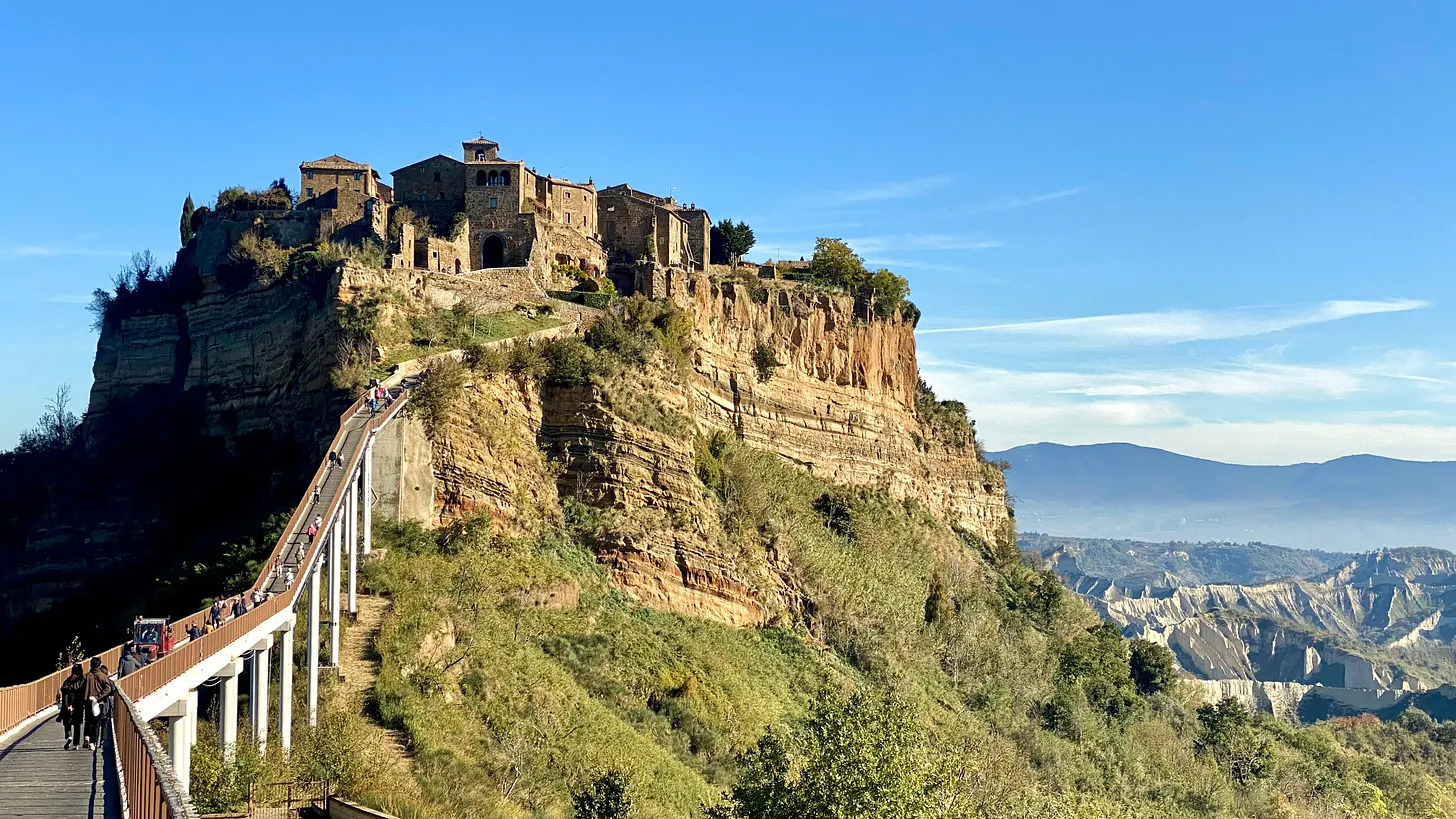
Just an hour outside Rome, you'll find a slowly crumbling city holding out on a hill, a last stance against the changings of time.
Read more